
A windy afternoon is a poor time to learn how an awning retracts. When it’s calm, find the instructions for your model and ask the installer to demonstrate the controls, including what to do if power is interrupted. See also awning care note.
Before you buy: ask what happens when the weather changes
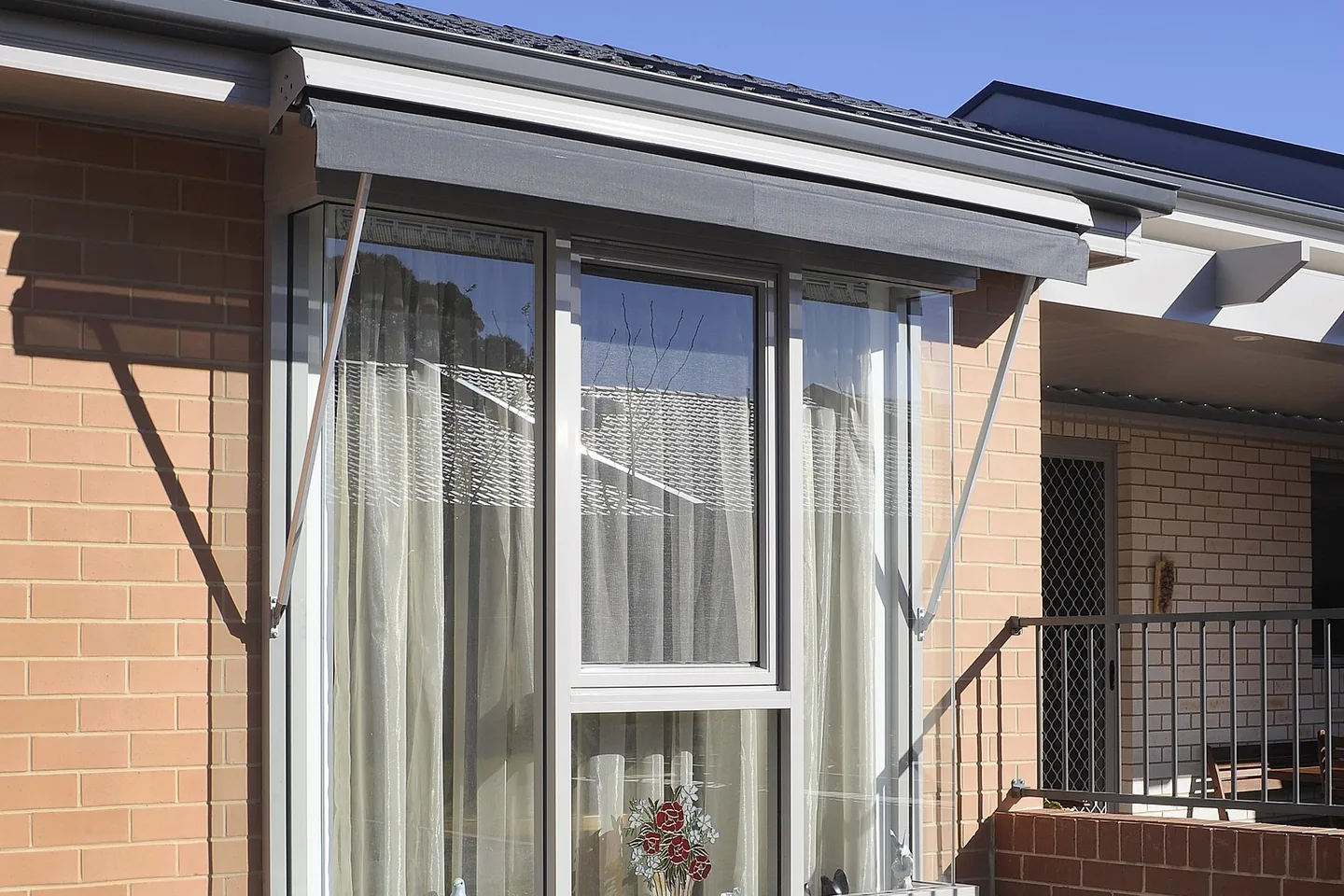
Pivot-arm awnings project fabric away from a window on arms. That can give a useful combination of shade and an opening beneath the fabric, but the projecting parts are exposed to weather. Ask the supplier how the proposed awning operates, what the manufacturer says about wind and rain, and whether it is appropriate for the particular wall and exposure.
Ask for written instructions for the exact configuration, not just a general statement that the awning is strong. Check who will assess the fixing surface, what maintenance is required and how you will operate it if the motor or power fails. A manual crank may suit some owners. A motor can make frequent adjustments easier but introduces power and service considerations.
Before leaving home or going to bed
Look at the forecast, consider the exposure of the opening and decide whether the awning should be put away. Conditions can change while nobody is there to operate it. Retract according to the manufacturer’s instructions and before the situation becomes hazardous. Do not go outside or reach from a window in dangerous wind to rescue a deployed awning. Follow local emergency advice.
If you are choosing an automated system, ask exactly what a wind sensor measures, how it is powered, how it is maintained and what happens during a power or communication failure. A sensor can be a useful addition where supported, but it is not a substitute for the instructions, a safe operating plan or attention to severe-weather warnings.
If something no longer looks right
From a safe position, look for obvious changes such as a loose or damaged fitting, fabric that is torn or no longer rolling evenly, or an arm that appears distorted. Stop using an awning that appears damaged or operates abnormally and contact the installer or a qualified service provider. Do not climb, dismantle spring-loaded components, improvise tie-downs or add supports without the manufacturer’s approval. A restraint can change how the system is loaded or prevent it from retracting.
Keep the model details, operating instructions and service contact somewhere easy to find. Ask for product-specific cleaning and inspection requirements rather than treating an occasional wash as a structural inspection.