
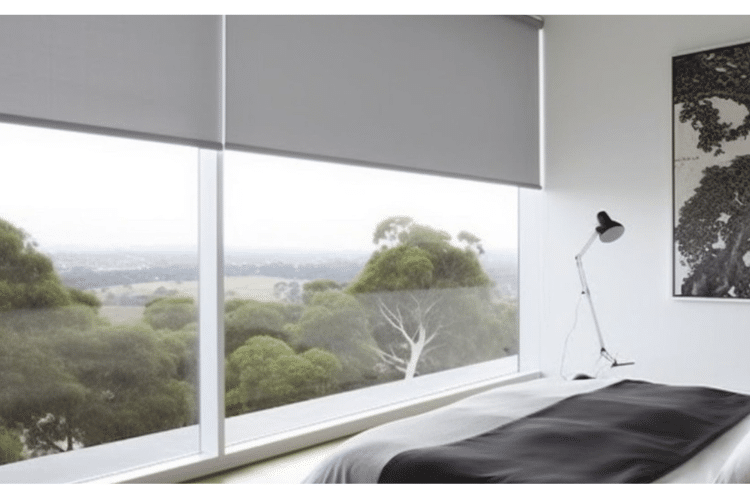
At noon, the front room can feel private behind a light fabric. After dinner the lamps come on and the view from the street changes. Try your samples at both times before deciding whether one layer will do.
The goal is not to make every window identical. A street-facing living room, an overlooked bedroom and a kitchen facing a private garden have different jobs to do. Write down the one thing you do not want to compromise on for each window before visiting a showroom. Fashionline’s existing privacy and light article is related reading; this guide is the room-by-room test.
Map the sightlines
Stand where a passer-by or neighbour might be able to see the window, without entering anyone else’s property. Note whether the concern is a direct view into a seated area, a bathroom window visible from an adjacent building, or headlights and movement after dark. A covering can be adjusted to reduce a sightline, but no general label guarantees privacy from every angle.
Then check the light. A living room may benefit from a filtered view during the day, whereas a bedroom may need a darker setting when someone sleeps. If daylight is important, ask how much of the glass will be covered when the blind or curtain is fully open.
Choose the control you will actually use
A single adjustable covering keeps the arrangement relatively simple. Slats or louvres can be angled to change the view and the incoming light. A fabric blind can be raised or lowered to change the covered area. The compromise is that one layer may not meet every daytime and night-time preference.
Layering gives you separate choices: a sheer or light-filtering layer for softer light, plus a more opaque layer for greater screening. It also needs more space, additional hardware and a larger budget than the equivalent single-layer arrangement. Check that both layers can be operated independently and will not interfere with handles, furniture or doors.
For a bedroom or bathroom, look closely at the sides, top and bottom of the installed covering. Gaps can affect light and sightlines even where the fabric itself is opaque. Discuss the actual frame and installation options rather than relying only on a fabric label.
Test a sample before committing
Hold a sample against the window in daylight, then repeat after dark with the room lights on. If possible, ask a trusted person to view it from outside while you stand inside. This simple test helps reveal the difference between a softly screened window and the level of privacy your household expects. Results change with lighting, fabric and angle, so test your chosen sample rather than assuming all sheers are alike.
Finish with the everyday questions. Can everyone reach the control? Will the covering clear the door? What does cleaning involve?
Loose cords and chains can be dangerous to young children. Keep them out of reach, and do not place a cot or climbable furniture where a child could reach a cord. Ask the supplier about coverings that operate without exposed cords, and about safe installation. The Australian Government blinds, curtains and window fittings guide sets out these precautions.
For a window that needs two settings, Premier Shades’ dual roller blinds show how separate fabrics share an opening.