
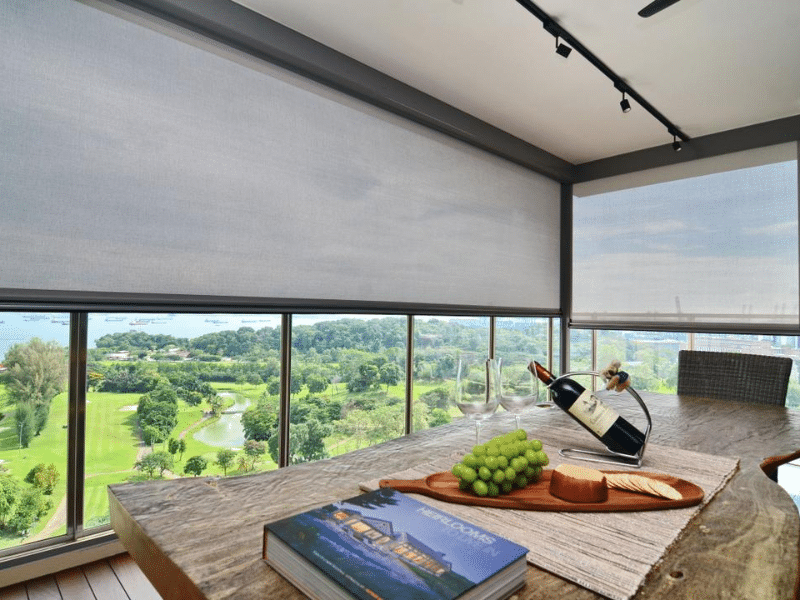
Pull out a chair on the Townsville patio at the time you normally eat outdoors. Which side gets sun, where does the breeze enter and which opening do you use to get back inside? Start your brief there. See also shading discussion.
Map the problem before choosing a fabric
Spend a few days noticing where sunlight reaches the table or seating and when the area becomes uncomfortable. A low sun entering from the side of a roofed patio may call for a different solution from overhead shade. Take a photo of the affected area and note the time. The goal is to explain the problem clearly, not to guess the correct product from a catalogue.
Also decide what you want to preserve. An open weave may allow more outlook than an opaque fabric, but the view, glare and privacy depend on the material and lighting. Ask to see larger samples against the light. If neighbours can look in after dark, check privacy with the patio lights on rather than judging a sample only during the day.
Think about the opening in use
A blind across an entertaining area should not make the route to the garden awkward. Check the position of doors, posts, outdoor furniture and operating controls. Ask how the blind is secured when lowered, where it sits when raised and whether the chosen arrangement leaves gaps around the sides or bottom. An outdoor blind should not be assumed to exclude insects or rain completely.
Some systems use side guides; others use different arrangements. Guides can be visually prominent and take space at the sides, so compare their appearance and the way they operate as well as the fabric. Where the opening is wide, ask whether it needs more than one panel and what the joins mean for the view.
Exposure changes the conversation
If your home is near the coast or the patio is exposed to salt spray, ask the supplier what frame, fasteners, fabric and finish are suitable for the site and request the care schedule in writing. Do not assume that every component has the same resistance to corrosion or the same warranty. Installation into sound, suitable structure also matters. A site assessment should identify the proposed fixing points.
Wind is a separate safety question. Ask when the specific blind must be retracted, how to secure it, and what to do ahead of severe weather. Follow the manufacturer’s instructions and local emergency advice. Do not assume that a motor, sensor or side guide makes a blind cyclone-safe, or that it can remain down during a storm. Plan to retract it while conditions are still safe rather than attempting to handle it in dangerous weather.
Questions worth taking to a consultation
- Which fabric options balance the desired outlook and shade, and what can be seen through each at night?
- How will the blind be fixed and operated, and will doorways remain convenient and clear?
- What wind limits or retraction instructions apply to the exact configuration?
- What cleaning and inspection does the manufacturer require for this site, and what does the warranty cover?