
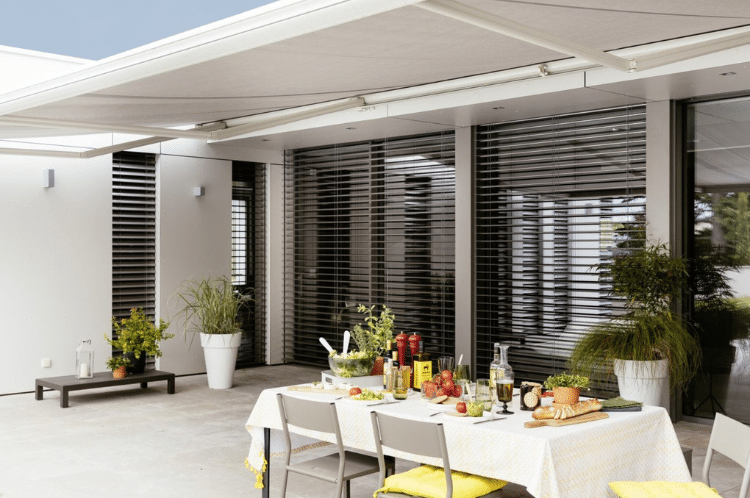
On a hot afternoon, note when the first patch of sun crosses the glass. Shade outside can intercept that light before it enters. Inside, a curtain or blind lets you adjust the view as the sun moves on. See also shade solutions guide.
Follow one window through the day
Before looking at a catalogue, note when direct sun reaches the window and when glare is inconvenient. A window beside a television, dining table or desk may need a different response from one where the view is the main attraction. Notice whether an existing eave, neighbouring structure or tree already provides shade, and whether that changes with the season.
Also record when privacy matters. A street-facing room used after dark has a different need from a garden-facing room used mainly in daylight. A see-through screen fabric may preserve an outlook in some lighting conditions but cannot be assumed to provide privacy at night with interior lights on.
Choose the outdoor job first
If direct sun on the glass is the issue, an appropriately positioned external shade can intercept it before it reaches the window. The amount of shade depends on the opening, the shade’s size and position, the angle of the sun and whether the shade is in use. A fixed solution may suit one situation. An adjustable one can offer a different balance of access, view and seasonal flexibility.
Check for obstacles before choosing: doors that swing out, an existing verandah, pipes, boundaries or limited fixing space. If an outdoor blind is proposed for an entertaining area rather than directly over a window, discuss exactly which glass it will shade and when. Do not assume it covers every angle of sun or that every product is suitable for every exposed location.
Use the inside layer for the moments the outside layer cannot solve
Inside, a light-filtering blind or sheer curtain can soften the view of a bright window while allowing daylight through. A more opaque layer can provide additional privacy and reduce light entering through the fabric. Installation details still matter: gaps around the edge may let in light or reveal sightlines.
A combined arrangement takes more room and can cost more than a single covering. It may also mean more decisions about controls and care. If the window is already well shaded outside and you need only evening privacy, an indoor layer alone may be the simpler answer. Conversely, if direct sun on the glass is the main concern, a room-darkening fabric inside is not the same intervention as preventing that sun from reaching the glass.
Bring a short brief to the consultation
Photograph the window from inside and out. Note its approximate dimensions, direction if known, times of glare, door operation, desired outlook and privacy needs. Ask what happens when each proposed covering is open and closed, how it is operated and cleaned, and which manufacturer’s limits apply to the external product. Follow those instructions. Do not rely on generic advice for wind or severe weather.