
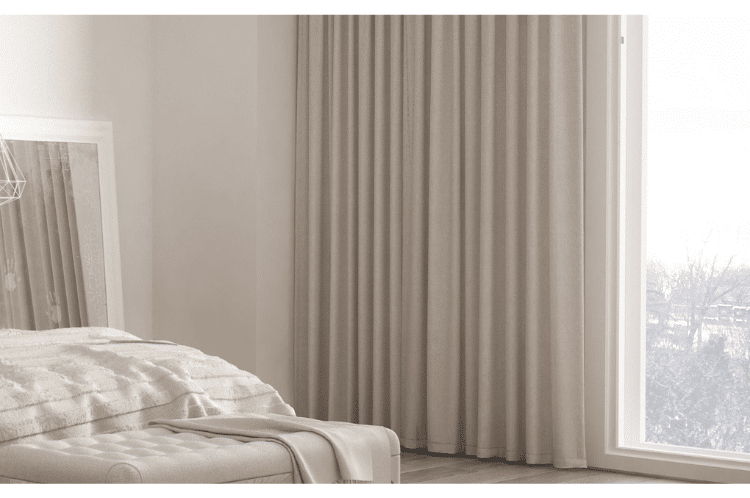
A street-facing bedroom may need a view of the trees in the morning and privacy as soon as the lamps come on. Two independently moving fabrics let the room change jobs without giving up either.
Picture a day in the room
Imagine a living room that is pleasant in morning light but overlooked after dark. A filtering layer could soften the window during the day, while a more opaque layer could be lowered in the evening. A bedroom may have a different priority: limiting early light, with a softer setting when the room is in use during the day.
Neither example means a particular fabric guarantees privacy in every situation. A sunscreen layer’s transparency changes with the fabric and lighting. When the room is lit at night, people outside may be able to see in. Look through the actual sample under comparable lighting. The opaque layer’s fit and gaps matter as well.
Two rollers or a different solution?
A dual-roller system puts two rolls at one opening, allowing each layer to be raised or lowered. It may suit a room where you regularly switch between a filtered view and a more private setting. In return, there is another layer to operate and clean, and the brackets may need more space.
A single light-filtering blind is simpler if evening privacy is already provided elsewhere. A single blockout blind can suit a room where reduced light is the main requirement, although it offers less choice between open and closed. A sheer curtain combined with a separate opaque covering offers another look, but needs its own track or fitting space and care plan. Compare the finished installation rather than fabric price alone.
Check the window before ordering
- Depth and clearance. Is there enough room for the proposed brackets inside the recess, or would the blind need to sit outside it? Check handles and door movement.
- Light gaps. Where can light enter around the installation? Blockout describes the fabric, not a promise of a completely dark room.
- Daily operation. Can everyone who uses the room comfortably reach and operate the controls?
- Fabric and care. Check each fabric’s appearance, privacy and cleaning instructions. Ask how both layers will look when raised and lowered.
- Quote. Ask for the layers, controls, fitting and any extra work to be itemised so comparisons are meaningful.
Motorisation may be worth discussing for a hard-to-reach window or frequent adjustment, but check power arrangements, controls and compatibility for the actual system rather than assuming every blind includes them.
Loose cords and chains can be dangerous to young children. Keep them out of reach, and do not place a cot or climbable furniture where a child could reach a cord. Ask the supplier about coverings that operate without exposed cords, and about safe installation. The Australian Government blinds, curtains and window fittings guide sets out these precautions.